The Order of Malta in the Philippines: Faith, Service, and a Living Tradition
Saints PH | by Homer Nievera | The Order of Malta in the Philippines: Faith, Service, and a Living Tradition
The Order of Malta, officially known as the Sovereign Military Hospitaller Order of St. John of Jerusalem, of Rhodes, and of Malta, is one of the world’s oldest Catholic lay religious orders. With nearly a millennium of history, it carries a dual mission that has guided generations: Tuitio Fidei (defense of the faith) and Obsequium Pauperum (service to the poor and the sick).
While its roots trace back to Jerusalem during the Crusades of the 11th century, the Order’s legacy has stretched far and wide, reaching even the shores of the Philippines. Today, the Order of Malta Philippines continues this centuries-old tradition through medical missions, disaster relief, and social outreach programs that uplift some of the country’s most vulnerable communities.
A Journey Across Centuries
The story of the Order’s arrival in the Philippines mirrors the archipelago’s own deep Catholic heritage. After surviving centuries of wars and relocations — from Jerusalem to Rhodes, then to Malta — the Order spread its humanitarian presence through partnerships with the Vatican and Catholic missions worldwide.
By the 1950s, as the Philippines was rebuilding from the Second World War, the Order began forming ties with local Church leaders. The Philippine Association of the Order of Malta was formally established, and over the decades, it has become a trusted partner of the Catholic Bishops’ Conference of the Philippines (CBCP) in programs ranging from hospital support to disaster relief.
The Origins of the Order of Malta
1. Founding in Jerusalem (11th Century)
The Order of Malta traces its roots back to around 1048 AD, when a group of merchants from Amalfi, Italy, established a hospital in Jerusalem to care for pilgrims traveling to the Holy Land. The hospital was run by Benedictine monks, and its mission was both humanitarian and spiritual—to serve the sick and the poor, regardless of religion or background.
After the First Crusade (1099), when the Crusaders captured Jerusalem, the hospital and its community gained prominence. Under the leadership of Blessed Gerard Thom (also known as Gerard Tenque), the hospital’s caretaker, the group became recognized as a religious order dedicated to hospitality and care. This was the birth of the Order of St. John of Jerusalem, the earliest form of the Order of Malta.
2. From Caregivers to Defenders
While the Order began as a hospitaller community, the turbulent environment of the Holy Land soon demanded another role—defense. Pilgrims were often attacked on their journeys, and Jerusalem itself was under constant threat.
By the early 12th century, the Order evolved into a military-religious order, combining the defense of Christian pilgrims and territories with its original mission of hospital work. Members took monastic vows (poverty, chastity, obedience) but also became knights sworn to protect the faith.
This dual mission was summarized in the motto that remains central today:
- Tuitio Fidei – “Defense of the Faith”
- Obsequium Pauperum – “Service to the Poor and the Sick”
3. Recognition by the Church
In 1113, Pope Paschal II formally recognized the community as a religious order under papal protection, granting it independence from local bishops. This papal bull (“Pie Postulatio Voluntatis”) gave the Order the authority to elect its own leaders and manage its affairs.
This recognition marked the Order as one of the earliest and most enduring Catholic religious orders with both charitable and military roles.
4. Expansion and Relocations
As the Crusader Kingdoms collapsed in the late 12th and 13th centuries, the Order was forced to move several times:
– Jerusalem (11th–12th century) – Original founding and hospital mission.
– Rhodes (1310–1522) – The Order established a strong naval presence, defending Christendom from Ottoman forces.
– Malta (1530–1798) – Granted the island by Emperor Charles V, the Knights became known as the “Knights of Malta.” Here, they built fortresses, hospitals, and fleets, playing a key role in European defense — most famously during the Great Siege of Malta (1565), when they repelled a massive Ottoman invasion.
– Rome (1834–present) – After losing Malta to Napoleon in 1798, the Order eventually settled in Rome, where its headquarters remain today.
5. The Modern Sovereign Order of Malta
Today, the Sovereign Military Hospitaller Order of St. John of Jerusalem, of Rhodes, and of Malta is:
A Catholic lay religious order with sovereign status in international law.
Active in over 120 countries, with medical, social, and humanitarian projects serving the poor, sick, refugees, and victims of conflict or disaster
A recognized diplomatic entity, maintaining formal relations with over 100 states and permanent observer status at the United Nations.
Despite its medieval knightly origins, the Order of Malta today is better known for its hospitals, medical missions, and charitable work, continuing the vision of Blessed Gerard nearly 1,000 years ago.
The Order of Malta: From Jerusalem to Manila
The Order’s long and storied journey began in the Holy Land, moved to Rhodes, then Malta, and eventually spread across the globe. Its resilience is unmatched: surviving centuries of wars, political shifts, and societal changes, yet always remaining anchored in its spiritual mission.
The Order of Malta Philippines was formally established in 1957, making the Philippines one of its key national associations in Asia. The timing was providential; post-war recovery left the nation with pressing social, medical, and humanitarian needs. The Order stepped in to provide care for the sick, relief for the poor, and spiritual support for the faithful.
Guided by the same charism that once cared for pilgrims in Jerusalem, the Philippine branch built its mission around medical outreach, feeding programs, disaster relief, and pastoral care. Over the decades, the Order became a quiet but steady partner in the nation’s humanitarian landscape.
Leaders of Faith and Service
At the helm today is HE Dame Josephine Bantug, the current president of the Philippine Association. Under her leadership, the Order’s 37 knights and dames serve communities with devotion and integrity, proving that spiritual vows can translate into real change for those most in need.
Among the Order’s most prominent Filipino figures is Mercedes Arrastia-Tuason, a Magistral Dame and former Philippine ambassador to the Holy See. Recognized by Pope John Paul II in 2003, Tuason exemplifies the union of diplomacy, faith, and service.
Other key members, including Archbishop Socrates Villegas, Mina Carag Harada, Odelia Arroyo, Dr. Jaime Lapus, and Msgr. Esteban Lo has represented the Order in global pilgrimages such as the Lourdes journeys, ministering to the sick (the “malades”) and embodying compassion in action.
The Order’s Humanitarian Footprint in the Philippines
The Order of Malta Philippines’ history is deeply intertwined with the nation’s needs. Since its establishment, the Order has been known for its medical missions, feeding programs, and disaster relief operations, responding especially during typhoons and natural calamities.
Some of its hallmark initiatives include:
- Feeding and Nutrition Programs – Serving malnourished children and vulnerable families.
- Healthcare Outreach – Bringing doctors, nurses, and medicines to remote areas.
- Disaster Relief – Mobilizing resources during floods, earthquakes, and volcanic eruptions.
- Pastoral Pilgrimages – Supporting the sick during faith-centered trips to Lourdes and other holy sites.
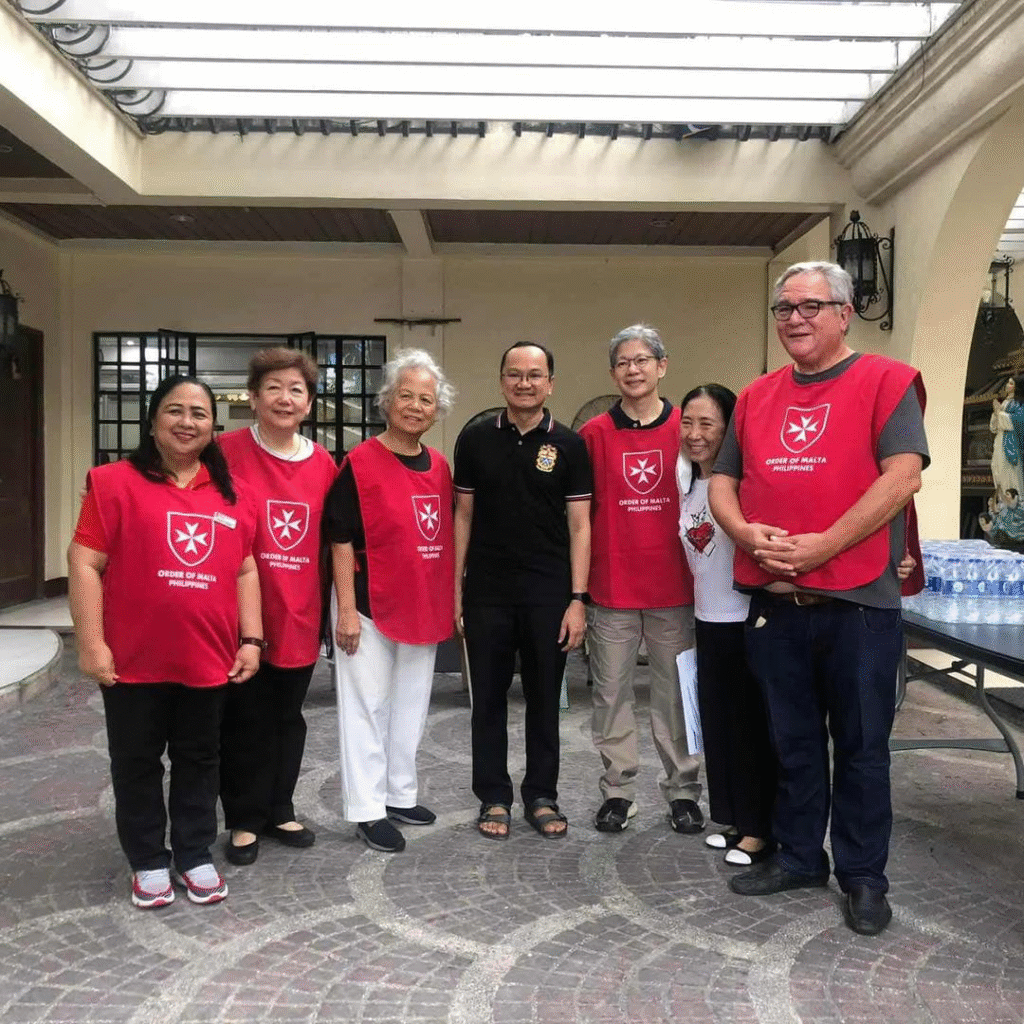
These efforts are supported by a global network of 50 national associations and diplomatic missions, ensuring the Philippines is not alone in its struggles but backed by an international Catholic humanitarian family.
900 Years of Faith, Living Strong in the Philippines
In 2013, during the Order of Malta’s 900th anniversary, the Philippine delegation took part in a historic celebration in Rome led by Pope Benedict XVI. President Don Ernesto Rufino Jr., alongside members like Dame Josephine Bantug and Mercedes Tuason, represented the country, reminding the global Church that Filipino knights and dames are vibrant stewards of this thousand-year tradition.
That same spirit continues today. Whether through local community work or international pilgrimages, Order of Malta members in the Philippines carry forward a legacy of compassion rooted in faith.
Knights and Dames in Action
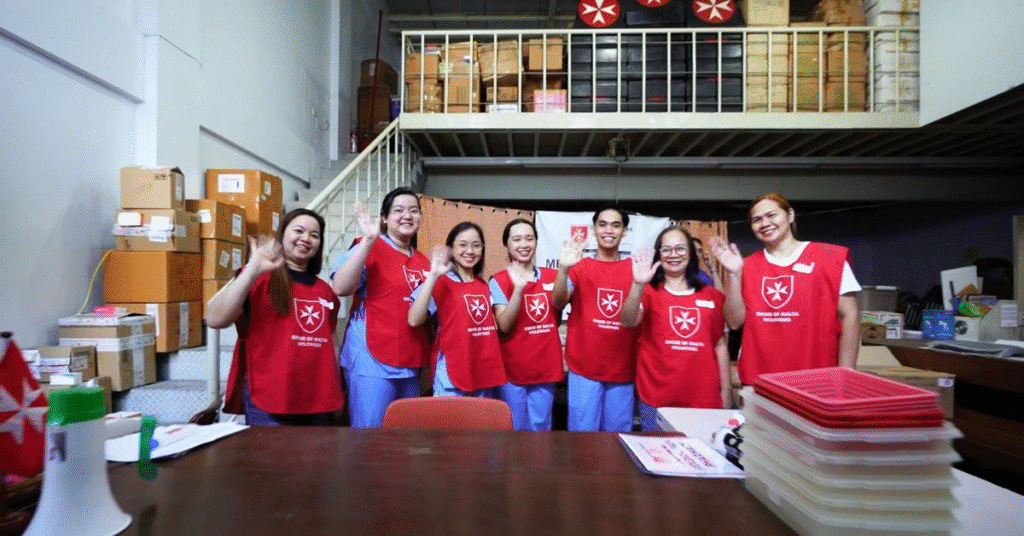
Members of the Order of Malta Philippines are not only figures in ceremonial robes. They are doctors running free clinics in rural areas, volunteers bringing food and medicine to disaster-stricken communities, and advocates promoting healthcare access for the poor.
Whether during typhoons, volcanic eruptions, or pandemics, the Order has stood as a symbol of Catholic compassion and resilience. Its local members, Knights, Dames, and volunteers, embody the values of faith-driven service, often working quietly behind the scenes without fanfare.
Sidebar Quick Guide: How to Become a Member of the Order of Malta Philippines
Becoming part of the Order of Malta Philippines is not simply about prestige; it is about answering a lifelong call to serve. Here’s what you need to know:
- Deep Catholic Faith – Membership requires being a practicing Catholic, committed to defending the faith and serving the poor.
- Service Record – Aspirants are usually individuals already engaged in charity, medical work, or humanitarian service.
- Nomination & Invitation – Admission is by invitation, typically through nomination by an existing Knight or Dame.
- Formation – Candidates undergo a period of spiritual formation and immersion in the Order’s mission and traditions.
- Investiture – Successful candidates are formally received in a solemn investiture as Knights or Dames of Malta.
- Commitment for Life – Membership is not honorary but a lifelong vocation of Catholic witness and service.
Tip: Those who wish to explore this path may reach out to the Order of Malta Philippines through its national office or via Catholic networks.
Why It Matters Today
In an age where digital noise often drowns out stories of hope, the Order of Malta’s presence in the Philippines is a reminder that faith and action can go hand in hand. The organization’s commitment to humanitarian service in the Philippines, coupled with its global network, makes it a unique bridge between tradition and modern social needs.
For many Filipinos searching online for Catholic service organizations, humanitarian volunteer work in the Philippines, or even how to join the Order of Malta, the Order offers both a spiritual home and a platform for meaningful impact.
Looking Toward the Future
The next decades will present both challenges and opportunities for the Order of Malta in the Philippines. Climate change will likely intensify the need for disaster relief. Health inequities will continue to demand compassionate responses. And younger generations, searching for authentic ways to live out their Catholic faith, will look to institutions like the Order for guidance.
By nurturing a new wave of Knights, Dames, and volunteers, the Order ensures that its nearly thousand-year-old mission remains alive, adapted to the needs of modern society but rooted in timeless values.
Conclusion
The Order of Malta Philippines is not merely a historical curiosity or a ceremonial organization. It is a living force for good, woven into the fabric of Philippine Catholic life. With its long history of humanitarian service, transparent Catholic values, and dedicated members, it stands as a testament to what faith in action truly looks like.
For Filipinos drawn to a life of service, the Order offers a path where spiritual commitment meets concrete impact; a tradition that began in Jerusalem, flourished in Malta, and now thrives in the Philippines.